Texas Sea Grant Brings Oyster Restoration to Life with New Sea Center Texas Exhibit
Sea Center Texas Showcases Community-Led Oyster Restoration
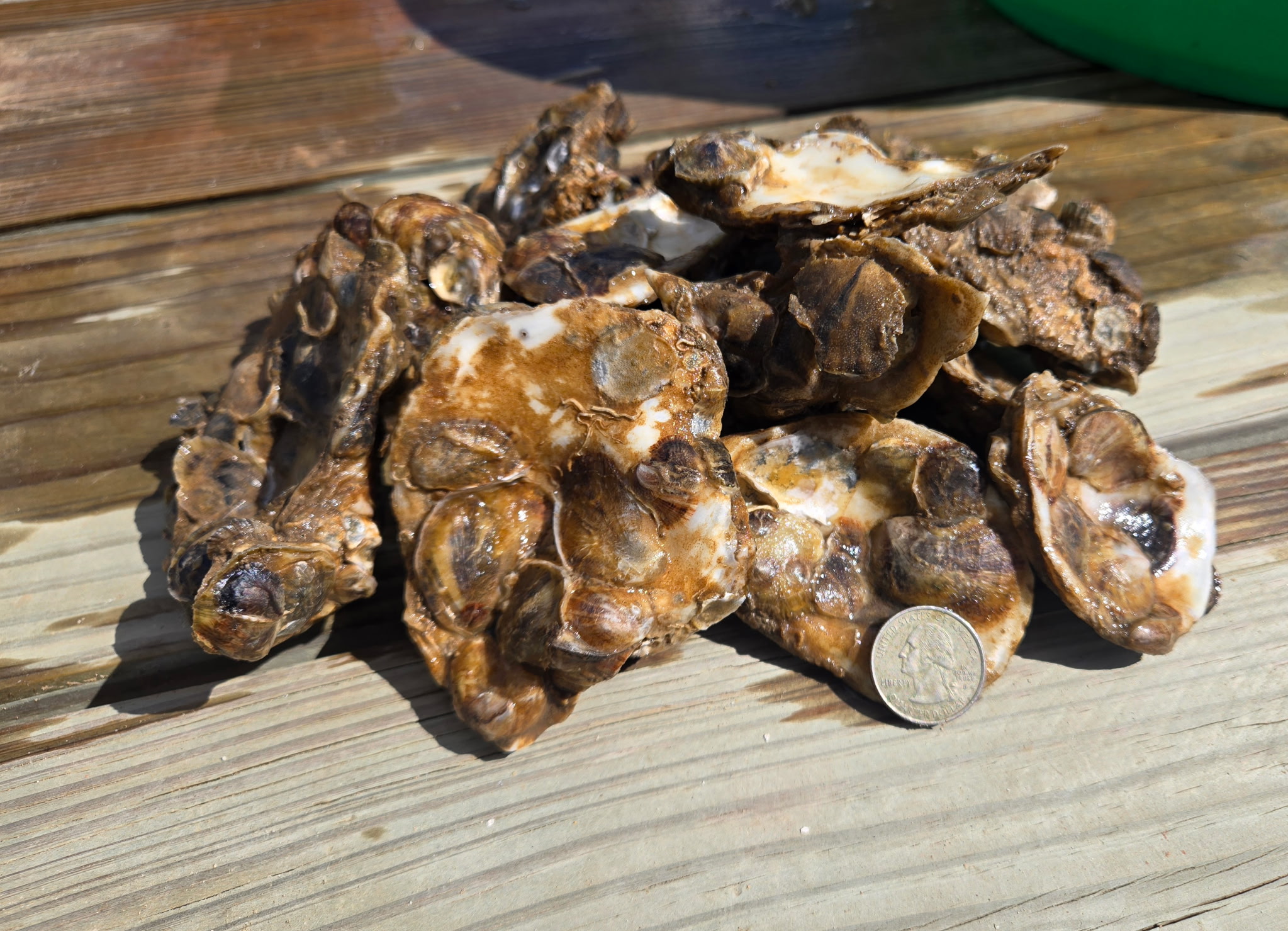 Oysters collected during monitoring are displayed alongside a quarter for scale.
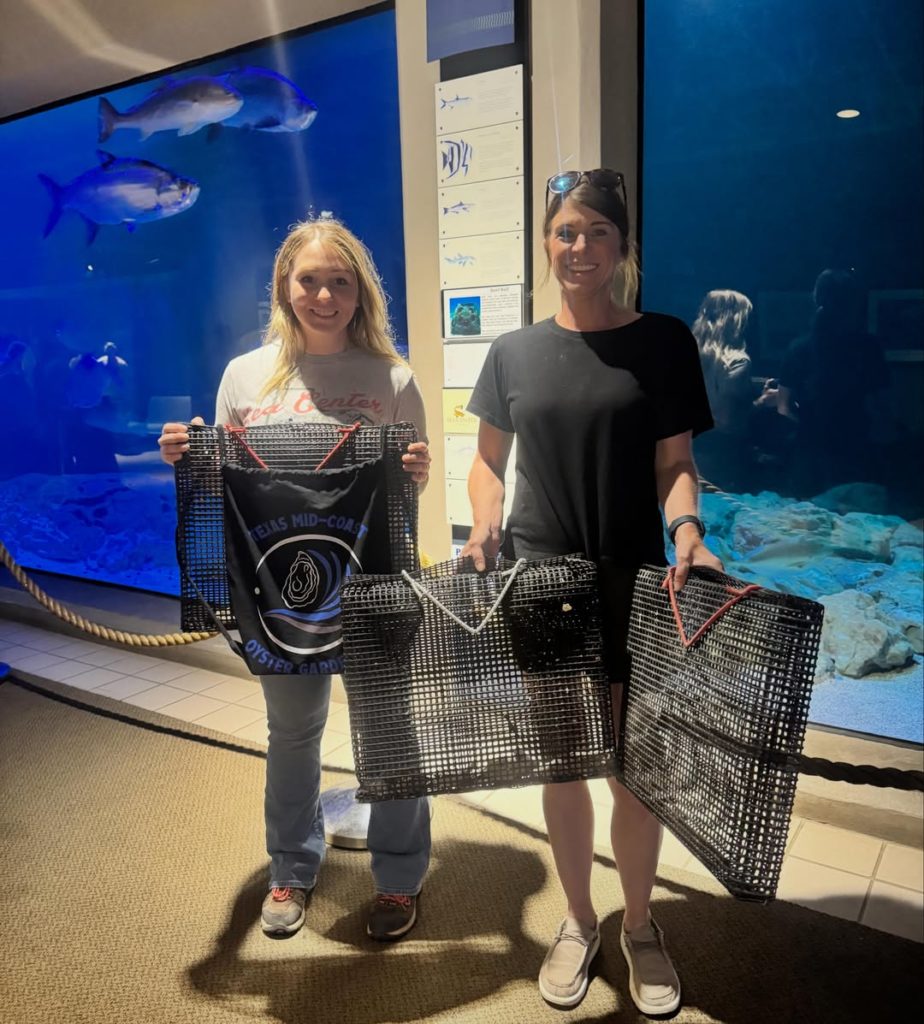
LAKE JACKSON, Texas — Visitors to Sea Center Texas can now discover how everyday Texans are helping restore one of the state’s most valuable coastal resources through a new Oyster Cultivation for Restoration exhibit developed by Texas Sea Grant.
The interactive exhibit, which debuted earlier this summer in the Coastal Bay Aquarium, introduces visitors to oyster gardening, a conservation effort that engages volunteers in growing juvenile oysters for reef restoration. Developed through a partnership between Texas Sea Grant, Texas A&M AgriLife Extension Service, the Mid-Coast Texas Master Naturalist Chapter and the Texas Parks and Wildlife Department (TPWD), the new display brings a community-based restoration effort to life for visitors of all ages.
Upon visiting, guests will see a working oyster gardening cage that provides an up-close look at how juvenile oysters, known as spat, are raised before being transferred to designated restoration sites. Educational signs highlight how oyster reefs improve water quality, provide habitat for marine life, protect shorelines from erosion and strengthen Texas estuaries.
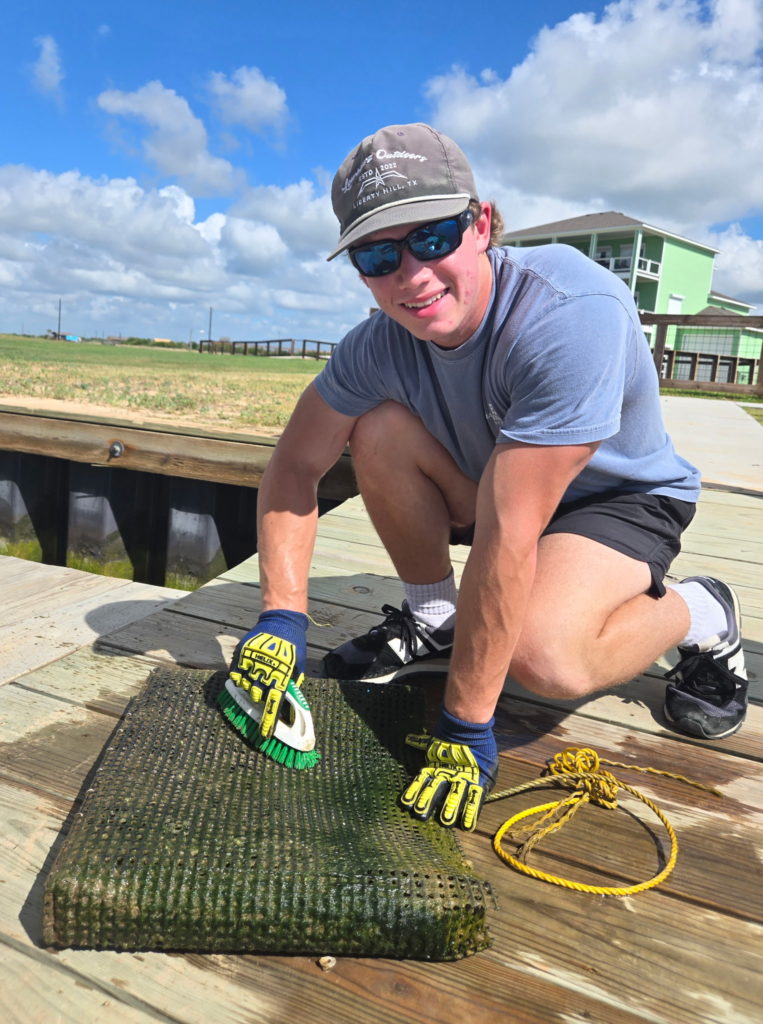
The display is modeled after the Mid-Coast Texas Master Naturalist Oyster Gardening Program, an ongoing volunteer-led initiative coordinated by Texas Sea Grant’s Matagorda County Coastal and Marine Extension Agent, Amy Nowlin. Through the program, trained volunteers raise juvenile oysters in specially designed cages suspended from docks, piers and other approved locations. Once the oysters have matured, they are relocated to designated restoration sites where they help rebuild natural oyster reefs. The oysters are cultivated exclusively for habitat restoration, not for consumption.
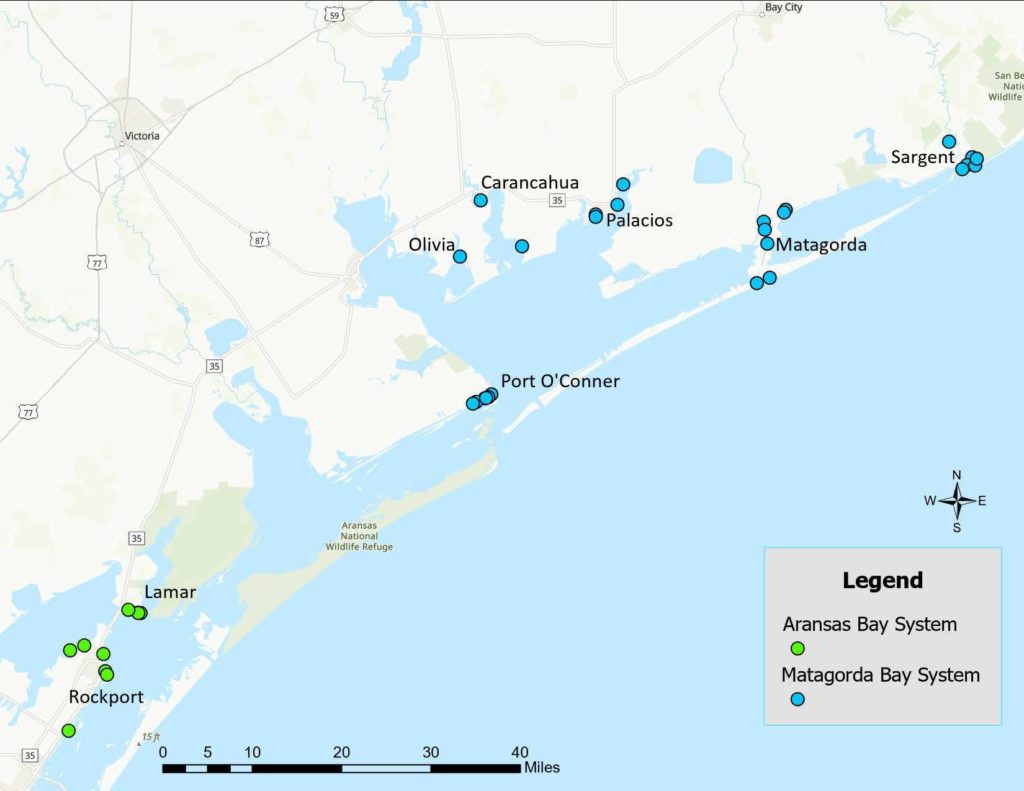
Building on the success of last year’s pilot effort, the Oyster Gardening Program has expanded significantly in 2026. More than 40 volunteer garden sites are now participating, with approximately 90 oyster garden bags deployed throughout the region—more than doubling last year’s restoration effort. While the inaugural season included over a dozen garden sites, only nine bags were ultimately collected due to challenges such as biofouling and other environmental factors that led some participants to retire their gardens early.
With the program’s tremendous growth and improved participation, organizers anticipate relocating between 7,000 and 10,000 mature oysters to designated restoration areas this season. This remarkable increase highlights the dedication of community volunteers and demonstrates how citizen-led conservation efforts can make a meaningful contribution to restoring healthy oyster reefs in local bays.
“Sea Center Texas reaches thousands of curious visitors every year, making it an incredible place to introduce people to oyster restoration,” said Nowlin. “What makes this exhibit especially unique is that it showcases a real, community-based conservation effort. We hope it inspires visitors to see that they can make a difference in their own communities by demonstrating how current volunteer efforts are making an impact on the health and resilience of Texas bays.”
The Oyster Cultivation for Restoration exhibit is currently on display. Admission to the museum is free. Sea Center Texas is open Tuesday through Saturday from 9 a.m. to 4 p.m. and Sunday from 1 p.m. to 4 p.m. For more information about the exhibit, Texas Sea Grant’s Oyster Cultivation for Restoration initiative, or the volunteer-led Mid-Coast Texas Master Naturalist Oyster Gardening Program, visit https://texasseagrant.org/focus-areas/healthy-coastal-ecosystems/oyster-cultivation/.
#####
About Texas Sea Grant
Texas Sea Grant is a unique partnership that unites the resources of the federal government, the State of Texas, universities, and communities across the state to create knowledge, tools, products, and services that benefit the economy, the environment, and the citizens of Texas. It is administered through the National Oceanic and Atmospheric Administration and is one of 34 university-based Sea Grant Programs across the nation. Texas Sea Grant is a non-academic research and extension program at Texas A&M University. The program’s mission is to improve the understanding, wise use, and stewardship of Texas coastal and marine resources.