
Sea Turtle 101 Brings Ocean Science to Coastal Classrooms
Making a splash in Mid-Coast Texas with Sea Turtle 101
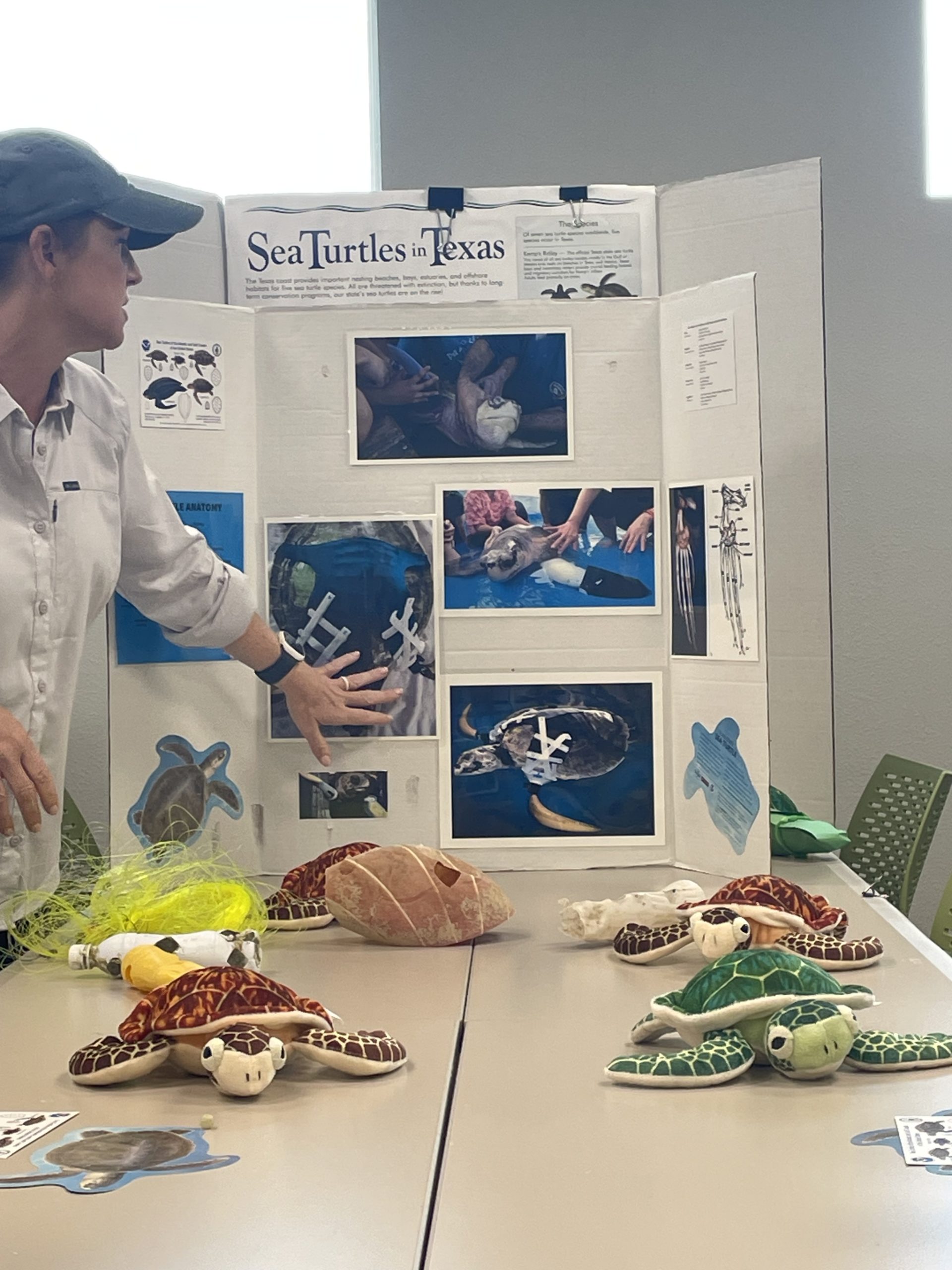 Nowlin presenting to student on Sea Turtles.
When Texas A&M Agrilife Extension and Texas Sea Grant Coastal and Marine Agent Amy Nowlin launched her Sea Turtle 101 program, she wanted more than to share facts. Her goal was to spark curiosity, creativity and action in coastal communities. Judging by the excitement in libraries, museums and community events across the Mid-Coast, she is doing exactly that.
So far, Nowlin has brought Sea Turtle 101 to the City by the Sea Museum in Palacios and the Bay City Library – Sargent Branch. This fall, the program will appear in the Palacios Library’s Science Rocks after-school series and the YMCA’s after-school programming. It will also headline Jackson County’s new GatorFest in September. She is exploring ways to share the program through the Mid-Coast Texas Master Naturalist chapter as well.
Discovering the world of sea turtles
The program covers a wide range of topics, beginning with fun and surprising facts about these ancient marine reptiles. Participants learn to identify the major species of sea turtles, explore their migratory patterns, and gain a basic understanding of their anatomy and the functions of their unique physical structures. The lesson also includes an overview of nesting behavior and the many challenges sea turtles face throughout their life cycle, including the harmful effects of ingesting plastic pollution.
Hands-on science and engineering
The science, technology, engineering and math (STEM) enrichment activity challenges participants to think like wildlife engineers. Using everyday materials, they design and build prototype prosthetic flippers for injured sea turtles. The activity blends biology and engineering, showing how creative thinking can solve real-world conservation problems. Nowlin says, “I’m always amazed at how creative students can be during the sea turtle prosthetic STEM lesson. You never know—one of their ideas could inspire the next big innovation!”
Seeing conservation tools in action
The program also introduces participants to important conservation tools used in commercial fisheries, such as turtle excluder devices (TEDs) and bycatch reduction devices (BRDs). Participants can see actual examples of these devices up close and learn how they function. Through demonstrations and discussion, they gain insight into how these innovations help reduce bycatch and protect sea turtles and other non-target species.
At the conclusion of the program, each participant receives a copy of the “Barney and the TED” coloring book, sponsored by Texas Sea Grant. This engaging and educational resource follows the story of Barney the sea turtle as he navigates a series of real-world challenges faced by sea turtles in the ocean. The book reinforces key concepts from the program in a fun, age-appropriate way, helping to extend learning and spark continued interest in marine conservation.
Why it matters for coastal communities
Sea turtles do more than capture attention. They help maintain healthy ocean ecosystems by trimming seagrass beds and balancing marine food webs. Sea Turtle 101 gives people the knowledge and tools to protect these animals, building a sense of stewardship for the Gulf Coast. Informed communities can make decisions that safeguard marine life and support local livelihoods.
School districts or educators interested in bringing Sea Turtle 101 to their students can contact Texas Sea Grant for more information or visit the project page to explore program details or see the program in action. Teachers can also request a free sea turtle poster for their classroom, lab or school — a colorful reminder of the amazing ocean neighbors we share the Gulf with.