
A Day in the Life of a Researcher: Locale Shrimp Boat
Marine researcher Sam Yasko embarks on a 14-day shrimping voyage, collecting data to improve fishing gear and sustainability. Working alongside the crew, she studies bycatch and tests new reduction devices, bridging the gap between science and fishermen to protect marine life and support the industry.
Texas Sea Grant
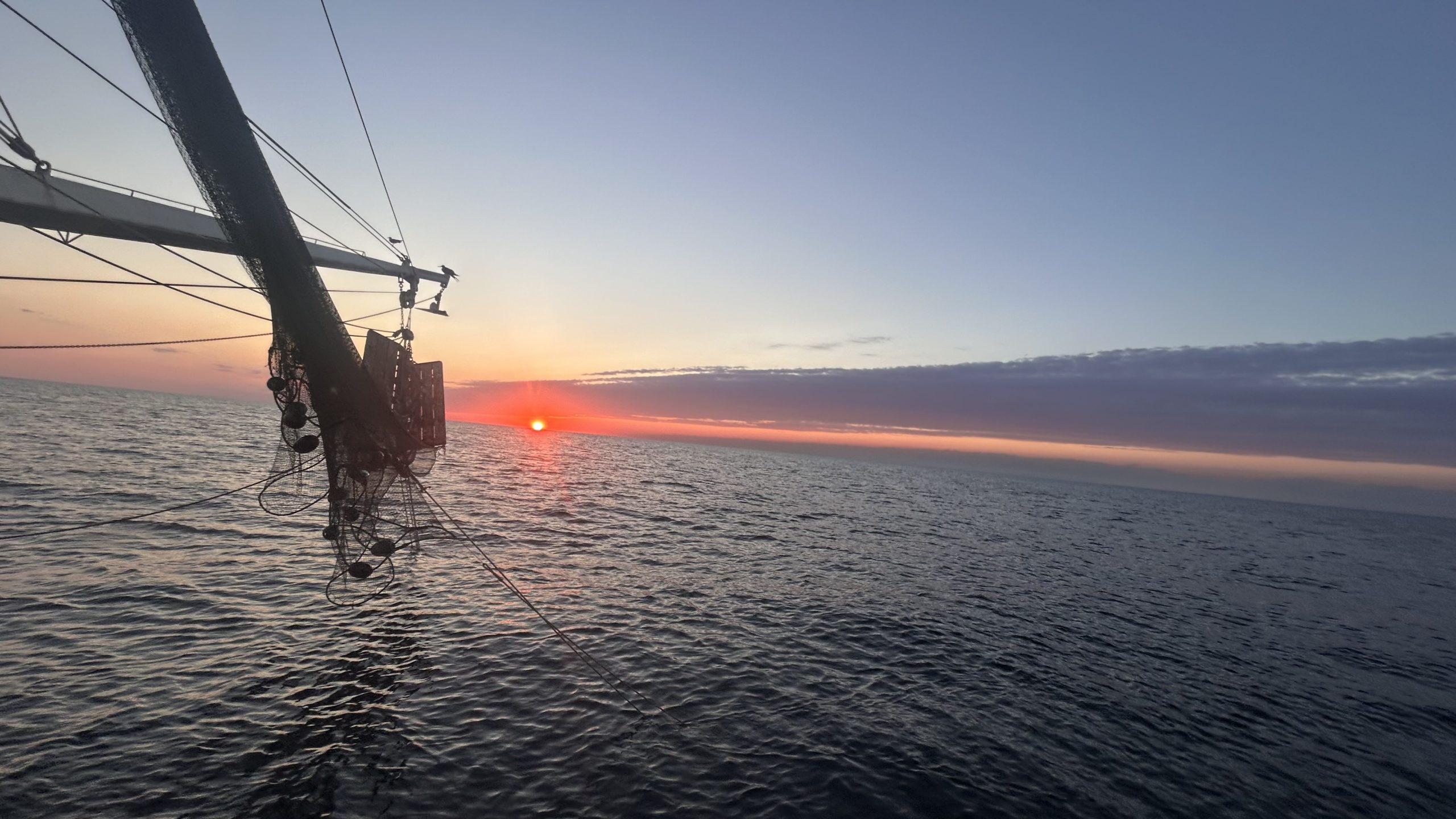
As she steps onto the shrimp vessel, Sam Yasko tries to imagine what will take place over the next 14 to 20 days. It is a typical commercial shrimp boat with no extra features, simple and functional. Only a hint of rust and the smell of salt air and diesel greet her as she mentally prepares for the voyage. Working as a researcher on a shrimp vessel brings a sense of anticipation with every new trip, and she never knows what to expect.
As a young girl, Yasko always knew she wanted to work in a field that involved interactions between humans and wildlife. She never anticipated it would lead to a life as a marine researcher. That passion came later, after she graduated from college and found her niche in the world. That niche is marine biology. Yasko found purpose in the ocean and its inhabitants, and she turned that purpose into a career working with the commercial fishing industry as a fisheries researcher. Along the way, she developed a passion not only for research but also for working with the men and women who make their living on the water and share her respect for the sea.
Back in the present, lines are thrown and the vessel begins to move out of the harbor. Yasko orients herself and starts looking over her gear and supplies. Collecting biological data at sea can be tedious, so making sure all her gear is ready for the first day of work is essential.
Shrimp vessels measure their fishing effort in what are called “tows.” Using a winch, the crew lowers the nets to the seafloor and drags them for a set period of time. When the captain believes there is enough catch in the nets, the crew hauls them up. The catch is dumped onto the back deck to be culled for shrimp.
With a researcher on board, the process changes slightly. Two nets are set aside from each tow so Yasko can obtain biological catch data. She records shrimp and catch weights and documents a sample of bycatch, counting, measuring and weighing species of interest. Sam repeats this process for two or three tows throughout the night.
As the last tow of the morning wraps up, Yasko finishes her final sample. Since she is done before the crew, she joins them on deck to help cull and dehead shrimp. It may seem like extra work, but it builds camaraderie. The crew has been gracious in helping her with samples and accommodating her research needs. Helping out when she can is only fair. Besides, listening to Spanish love songs blasting from a deck speaker while working in the sunshine is an enjoyable way to finish a work shift.
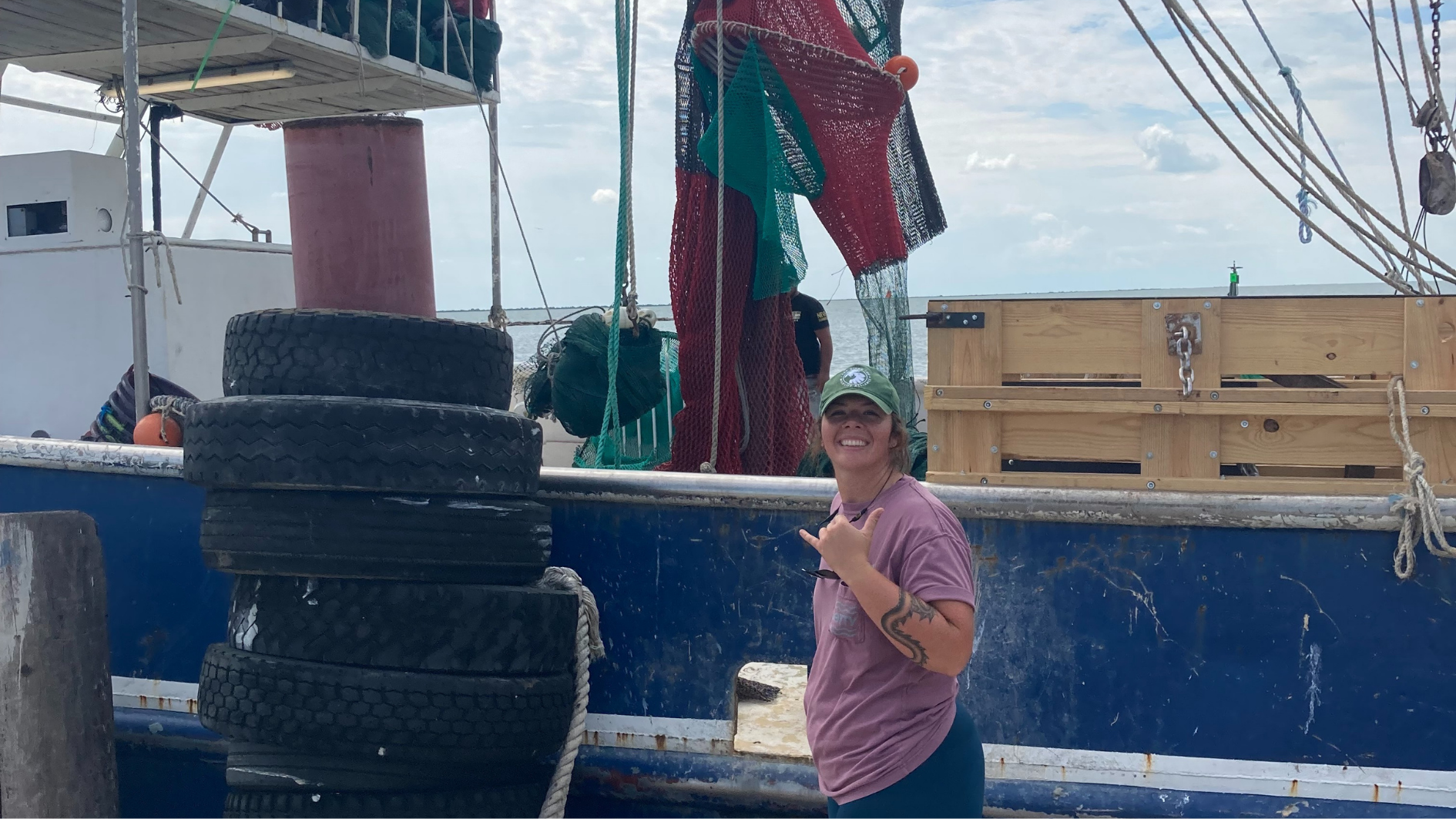
She looks out at the water as the crew push the rest of the bycatch off the sides. The number of sharks that congregate is astounding! It puts into perspective the ecological importance that commercial fishing boats have on species to new perspectives. Many species, such as sharks and dolphins, now target fishing vessels’ bycatch for food.
Yasko steps into the icy cold cabin and makes a cup of coffee. Sitting at the galley table, she looks over the day’s data. This is the most important part of the trip. The data collected will be used to evaluate the effectiveness of the gear being tested. In this case, new bycatch reduction devices, or BRDs, are being tested as part of the Better BRD Program. The program is developing BRD designs that reduce the number of finfish caught in shrimp trawls. This helps shrimpers by cutting culling time and improving the ecological sustainability of the fishery.
As Yasko reviews her data with a warm cup of coffee, she is reminded why her work matters. Science and research can support everyday people working in tough environments. Commercial fishing is not easy. It takes passion and a strong work ethic to stay in the industry. Through her work, Sam hopes to build stronger communication and trust between fishermen and biologists — two groups working toward the same future on the water.
####
About the Better BRD Project
The Better Bycatch Reduction Devices (BRDs) for the Shrimp Trawl Fishery project is a partnership among NOAA Fisheries, Louisiana Sea Grant, and Texas Sea Grant. Part of the Deepwater Horizon oil spill restoration efforts, the project aims to support finfish recovery by developing, testing, and certifying more effective BRDs—net modifications that reduce bycatch of non-target species while maintaining shrimp catch. By advancing conservation and providing shrimpers with practical, flexible gear options, the project strengthens ecological health and helps ensure the long-term sustainability and economic viability of the Gulf of America shrimp fishery.
About Texas Sea Grant
Texas Sea Grant is a unique partnership that unites the resources of the federal government, the State of Texas and universities across the state to create knowledge, tools, products and services that benefit the economy, the environment and the citizens of Texas. It is administered through the National Oceanic and Atmospheric Administration and is one of 34 university-based Sea Grant Programs around the country. Texas Sea Grant is a non-academic research center at Texas A&M University. The program’s mission is to improve the understanding, wise use and stewardship of Texas coastal and marine resources.