
2026 Oyster Gardening Program Relocates More Than 11,000 Oysters and Counting to Restore Matagorda Bay Reefs
Volunteers and community partners relocated oysters to Dog Island Nature Preserve, with another collection planned for Aransas Bay in November.
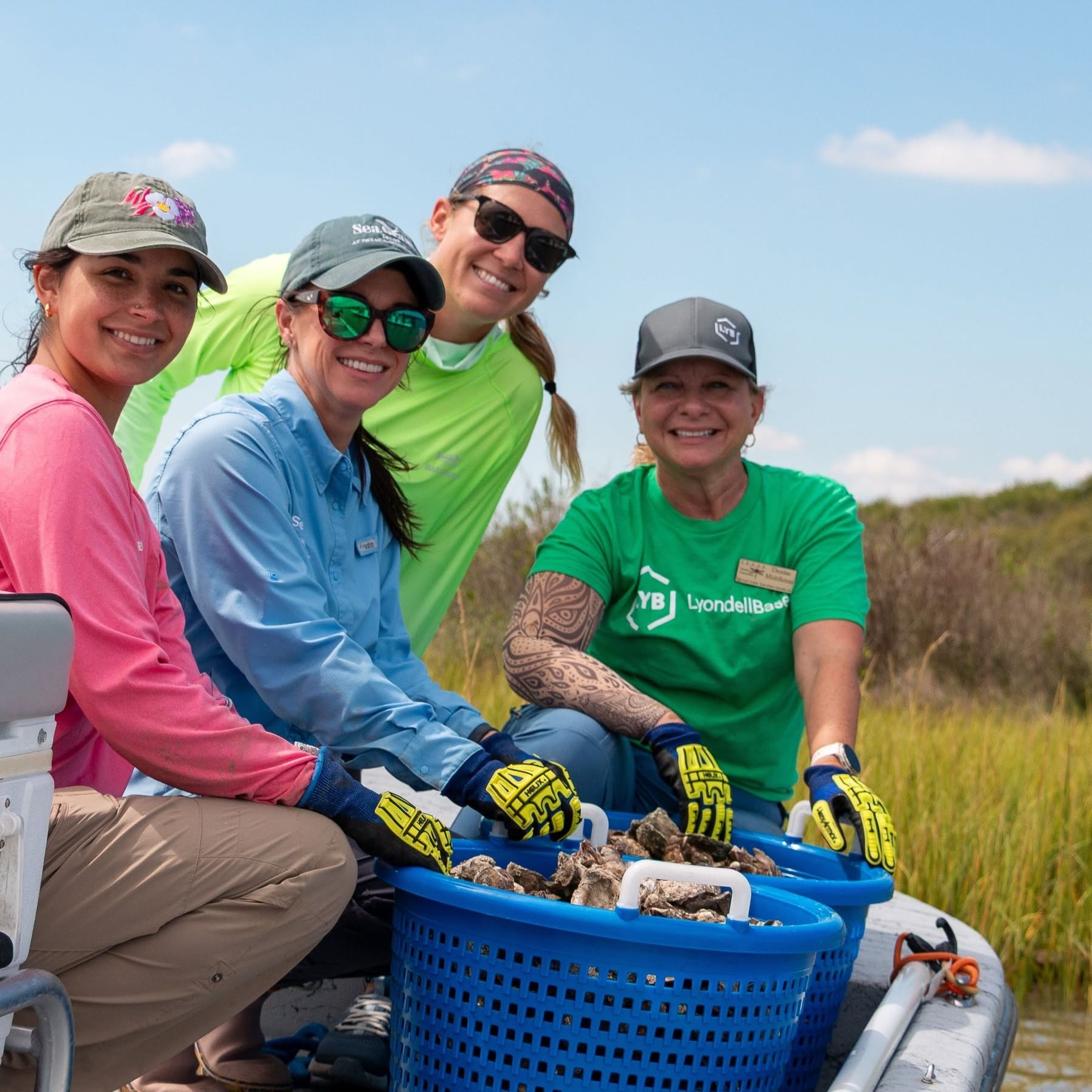 Members of the 2026 Oyster Gardening Relocation Team: Alexa Chapa, Alyssa Dibbern, Denise Middleton, Olivia Houston and Amy Nowlin.
MATAGORDA COUNTY, Texas – What began as a community-driven effort to restore local oyster reefs continues to grow, with the 2026 oyster gardening season marking a significant milestone in coastal conservation. On Oct. 5, volunteers and community partners successfully collected and relocated 11,394 cultivated oysters from the Matagorda Bay System to Dog Island Nature Preserve, helping replenish declining oyster reefs and strengthen the health of the bay ecosystem.
Led by Texas A&M AgriLife Extension and Texas Sea Grant, in collaboration with the Mid-Coast Texas Master Naturalist Chapter, the Oyster Gardening Program brings together dedicated volunteers who play an active role in restoring coastal habitats across multiple Texas bay systems.
Unlike commercial oyster farming, which raises oysters for consumption, oyster gardening focuses entirely on ecological restoration. Over a six- to seven-month growing season, Texas Master Naturalists and community volunteers maintain oyster gardening cages suspended in coastal waters. These cages provide a surface for free-swimming oyster larvae to attach, grow and develop into juvenile oysters. Throughout the season, volunteers monitor growth, clean cages and document oyster recruitment, contributing valuable citizen science data while helping cultivate the next generation of oyster reefs.
The Matagorda Bay System’s 2026 collection resulted in 55 oyster gardening cages yielding an impressive 11,394 oysters for restoration. With the assistance of volunteers from LyondellBasell and the Matagorda Bay Foundation, the oysters were carefully collected, counted, transported and relocated to Dog Island Nature Preserve.
The preserve provides an ideal restoration site because it is closed to oyster harvesting, allowing the young oysters to mature, reproduce and contribute to the recovery of natural reefs. Oyster reefs serve as essential coastal infrastructure, filtering water, creating habitat for fish, shrimp, crabs and other marine organisms, and helping reduce shoreline erosion by buffering wave energy.
The 2026 season also demonstrated remarkable growth in community participation and restoration outcomes, with participation and oyster cultivation increasing approximately 450% compared with the previous season. This expansion reflects the growing commitment of local residents, conservation organizations and industry partners to protecting and restoring Texas coastal resources.
And the restoration efforts are not finished yet! Another round of oyster collection and relocation is scheduled for November 2026 in the Aransas Bay System. Volunteers will collect and relocate oysters cultivated at gardening sites within that bay system, further increasing the total number of oysters restored through the overall project. With the Matagorda Bay System already contributing 11,394 oysters, the upcoming Aransas Bay relocation will add to what is shaping up to be a record-setting restoration season.
The success of the Matagorda Bay relocation would not have been possible without the generosity and dedication of numerous volunteers and partners. Special appreciation goes to the Matagorda Bay Foundation for providing boat transportation and access to the Dog Island Nature Preserve restoration site, and to the LyondellBasell volunteer team for contributing their time, energy and hands-on assistance during the collection and relocation process, as well as boat transportation.
Heartfelt thanks also go to the Mid-Coast Texas Master Naturalists, community oyster gardeners, community volunteers and everyone who helped maintain the cages throughout the growing season. Their dedication over the past several months made this restoration effort possible.
Looking ahead to the 2027 season, program organizers hope to build on this momentum by recruiting additional oyster gardeners, expanding gardening locations across both bay systems and increasing the number of oysters cultivated for restoration.
“This program demonstrates how communities can make an extraordinary difference in protecting our coastal resources. Every oyster grown represents an investment in the future health and resilience of our Texas bays. We are incredibly grateful to our volunteers and partners and look forward to expanding these efforts next season,” said Amy Nowlin, Matagorda County coastal and marine resources representative.
Through continued collaboration, education and community involvement, the Oyster Gardening Program is proving that even small-scale restoration efforts can produce meaningful results when communities work together toward healthier, more resilient coastlines.
####
About Texas Sea Grant
Texas Sea Grant is a unique partnership that unites the resources of the federal government, the state of Texas, universities and communities across the state to create knowledge, tools, products and services that benefit the economy, the environment and the citizens of Texas. It is administered through the National Oceanic and Atmospheric Administration and is one of 34 university-based Sea Grant programs across the nation. Texas Sea Grant is a non-academic research and extension center at Texas A&M University. The program’s mission is to improve the understanding, wise use and stewardship of Texas coastal and marine resources.
