
Six Interns Begin Texas Sea Grant’s Summer Internships
Six undergraduate students from across Texas gaining hands-on experience in coastal science, outreach and applied research.
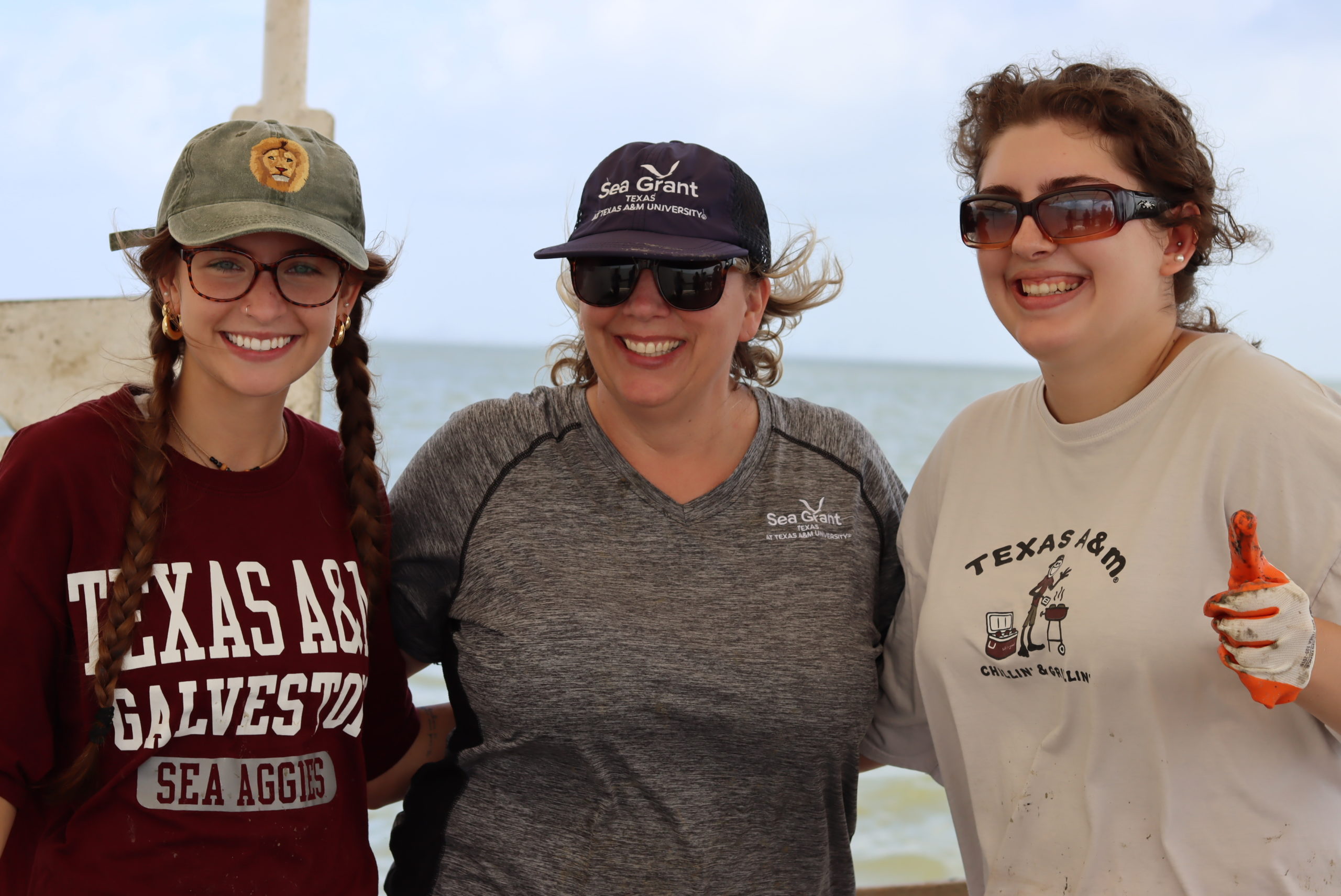 Sadie Berry, Brandi Keller, and Hailey Reese smile while posing on a research vessel in Galveston Bay.
Six undergraduate students from across Texas are beginning their journey this week as Texas Sea Grant interns, gaining hands-on experience in coastal science, outreach and applied research.
The 2026 cohort includes Madison Clickett, Leena Mitra, Emma Kohler, Sadie Berry, Hailey Reese and Chelsea Carrillo, each bringing unique academic interests and a shared passion for community-focused environmental work.
Clickett, a senior at Texas A&M University–Corpus Christi, is pursuing a Bachelor of Science with a concentration in marine biology. Mitra, from Cypress, Texas, recently completed her sophomore year at Texas A&M University in College Station, where she is majoring in Geographical Information Science and Technology (GIST) with minors in Climate Change and Environmental Systems Science. Kohler, from Dallas, is working toward her bachelor’s degree in biology at Texas A&M University–Corpus Christi and expects to graduate in spring 2028. Berry, from Comanche, Texas, is a senior majoring in Coastal Environmental Science and Society at Texas A&M University at Galveston. Reese, from the Houston area, is studying oceanography at Texas A&M University and will be a senior this fall. Carrillo, from Groves, Texas, is a senior at Lamar University majoring in environmental science with minors in chemistry and biology and will graduate in July 2026.
For Clickett, the internship represents an opportunity to expand both her scientific knowledge and her connection to the communities her work will ultimately serve. Drawn to the program through a professor’s recommendation, she is eager to explore different areas of marine science before graduating and potentially pursuing graduate school. As part of an Integrating Research and Extension Internship, she is working with Assistant Director for Fisheries Alexis Sabine and collaborating with Dr. Coffey on research on shark depredation at the Movement Ecology Lab at Texas A&M University-Corpus Christi. She is particularly excited to strengthen her ability to engage with communities through science and contribute to efforts that support both people and the environment.
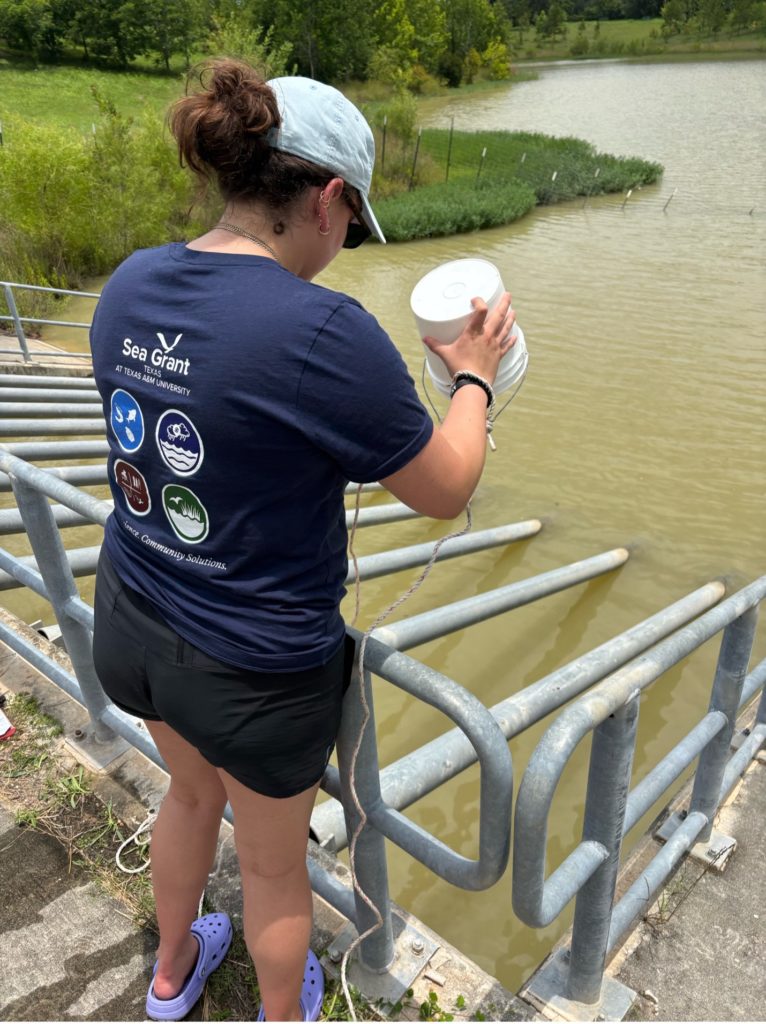
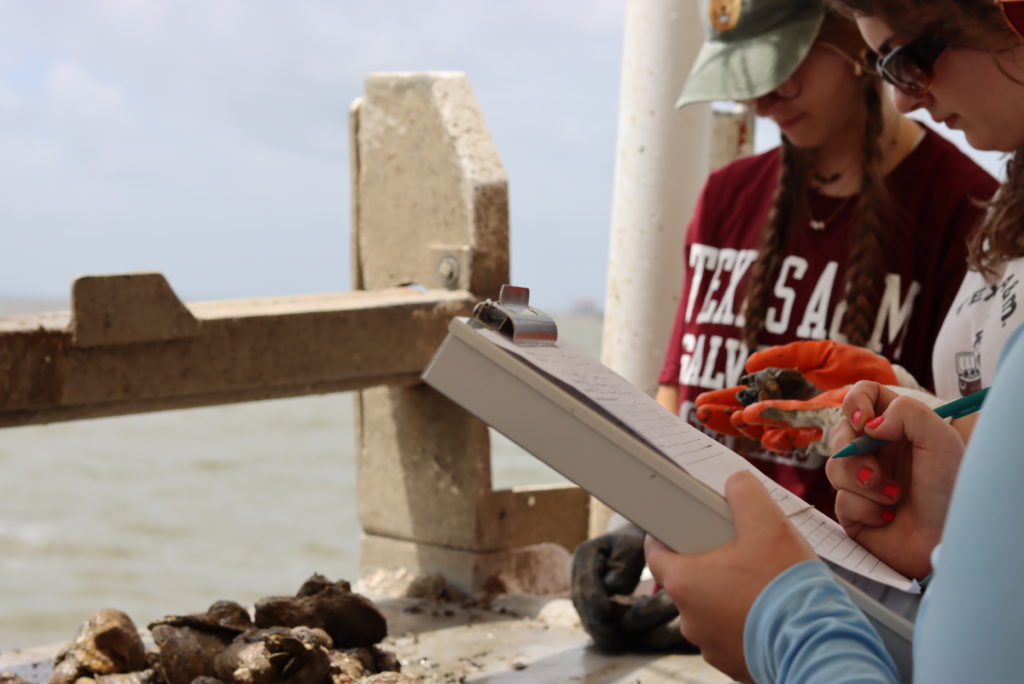
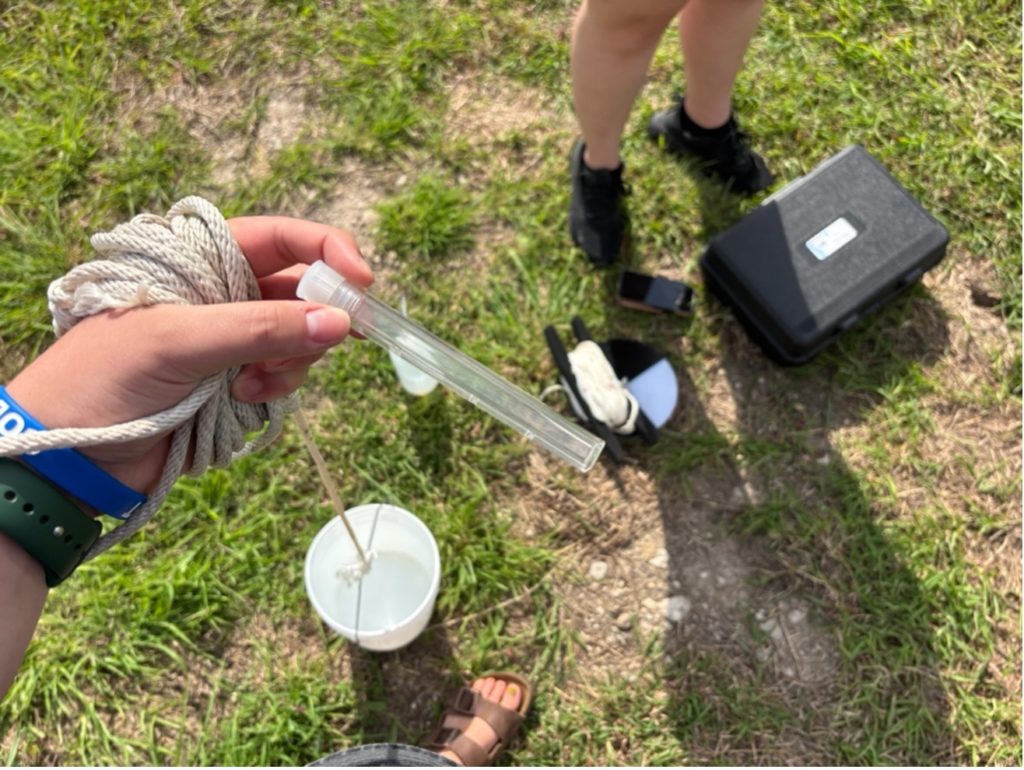
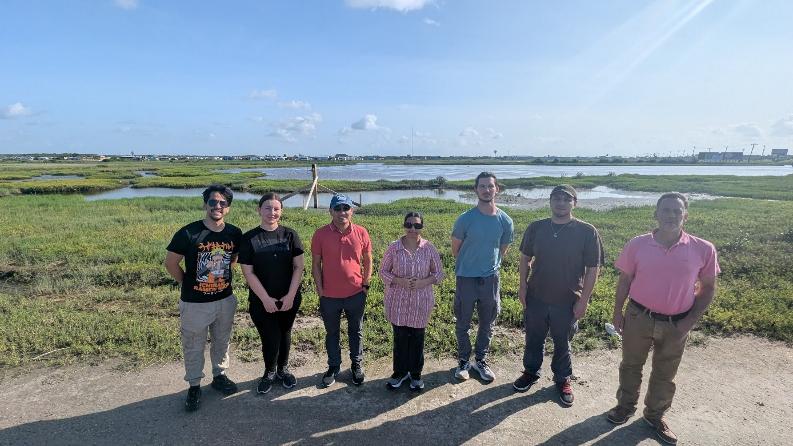
The other five interns applied and were awarded through Texas Sea Grant’s annual Community Engaged Internship program.
Mitra was drawn to the internship for its focus on disaster preparedness, an area she hopes to pursue professionally. With a strong interest in disaster resilience, environmental policy and geospatial analysis, she sees the experience as a chance to apply her technical skills to real-world environmental challenges. She is working in Corpus Christi with Coastal Resilience Specialist April Taylor on resilience planning and disaster preparedness efforts that help communities better prepare for natural hazards. She is especially excited to gain hands-on experience, collaborate with Sea Grant specialists and connect with communities through outreach.
Kohler’s interest in coastal conservation and environmental sustainability led her to the program, where she hopes to gain hands-on experience addressing issues that impact coastal communities. With academic interests in marine biology, microbiology and sustainability, she plans to pursue a master’s degree and work toward solutions to pressing environmental challenges. She is also working with Taylor in Corpus Christi on resilience-focused projects, such as developing educational materials surrounding sandbag use for coastal flooding in your home. She is most excited about engaging with communities, learning from professionals in the field and exploring different areas along the Texas coast.
Berry was drawn to Texas Sea Grant because of its mission to create meaningful impacts for both ecosystems and the communities that depend on them. She hopes to build a career that allows her to continue learning about natural environments while sharing that knowledge with others. In Galveston, she is working with Brandi Keller, Texas A&M AgriLife Extension and Sea Grant Coastal and Marine Extension Agent, supporting youth and adult extension programs that connect communities with coastal science. During the internship, she is particularly interested in gaining a deeper understanding of coastal systems while contributing to efforts that benefit both people and the environment.
Reese’s connection to the Gulf Coast, having grown up near it, has shaped her academic and career interests in oceanography and climate science. She was drawn to the internship for its focus on linking research with outreach, and the opportunity to see how science can be translated into meaningful programs for coastal communities. She is also working with Keller in Galveston, supporting youth and adult extension programming. She is especially interested in physical oceanography and the role the Gulf plays in regional ecosystems and climate, and looks forward to seeing how research, education and outreach work together to support communities.
Carillo is working in the Galveston area with Coastal Resilience Specialist Madgellen Cleary on projects focused on water quality and nature-based solutions that support healthy coastal ecosystems. With academic interests in environmental science, freshwater systems and groundwater resources, she hopes to pursue a career as an environmental or conservation scientist. She is particularly interested in ensuring access to clean water and is excited to apply her education in ways that create meaningful, tangible benefits for both the environment and the public while learning from professionals in the field.
Across the program, interns emphasized the importance of community engagement as a core part of their work. Whether it is building trust, listening to community needs or using science to create meaningful change, each student expressed a commitment to serving coastal communities and protecting natural resources in their future.