
A Week in the Life of a Future Gulf Fisherman
Throughout the week, they learn and practice essential safety procedures, then work alongside experienced commercial fishermen to handle lines, hooks, and catch on real fishing vessels.
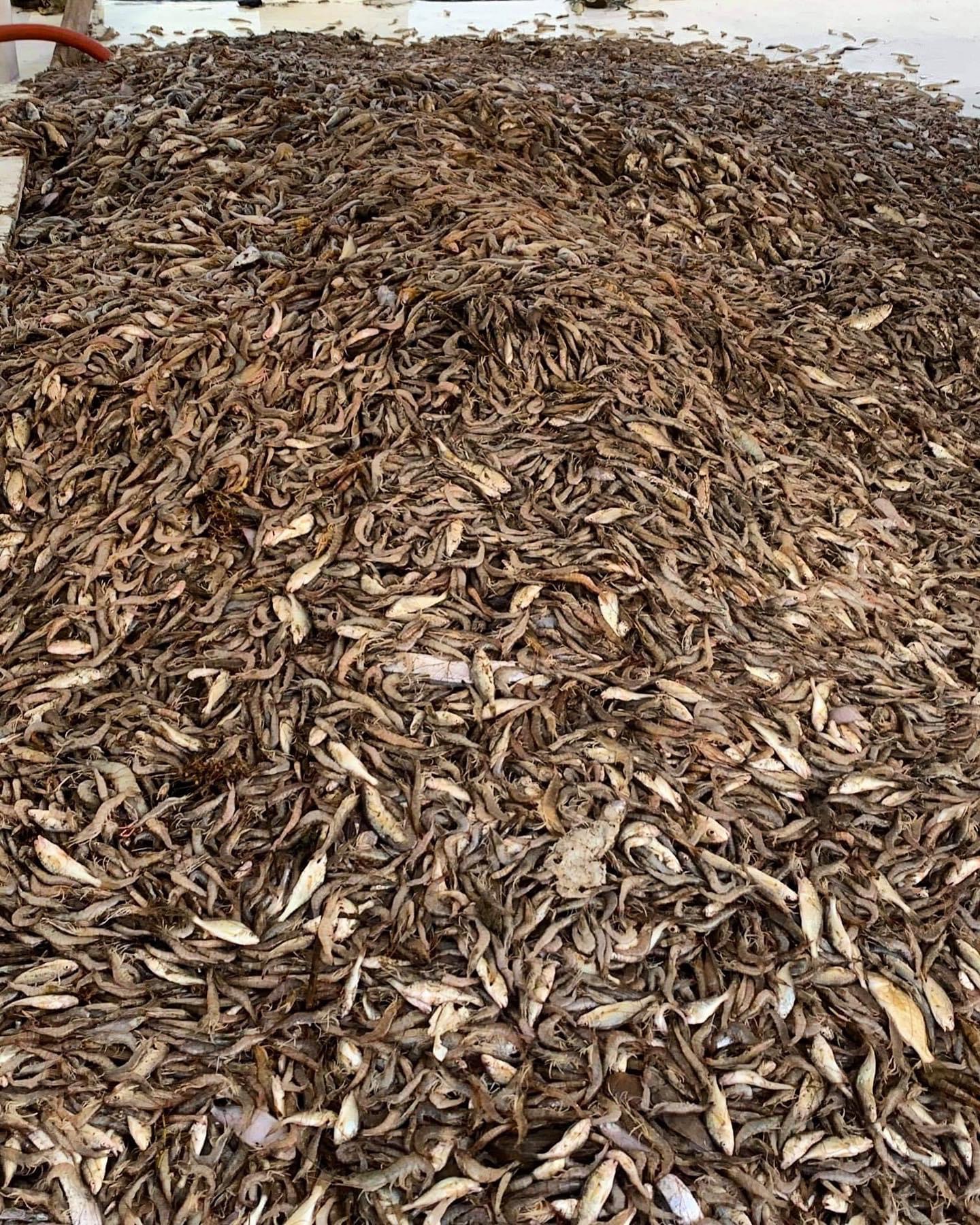 Shirmp on boat after catch.
At sunrise in Galveston Bay, a small cohort of aspiring fishermen boards a working vessel, the salty air mixing with the hum of engines. They are participants in the Gulf Commercial Fisherman Program (GCFP), an intensive, week-long training initiative launched by Texas Sea Grant, in partnership with Florida Sea Grant, and the Gulf of America Reef Fish Shareholders’ Alliance, designed to introduce newcomers to the Gulf’s commercial fishing industry.
Throughout the week, they learn and practice essential safety procedures, then work alongside experienced commercial fishermen to handle lines, hooks, and catch on real fishing vessels. Participants receive practical instruction in the business side of commercial fishing, covering topics like trip planning, operating costs, market prices, and strategies for staying profitable in a competitive industry. Participants also develop hands-on techniques for catching, sorting, and properly storing Gulf reef fish in ways that improve quality and reduce waste. In addition, they also receive training in fish identification, learning how to recognize key Gulf species, measure them correctly, and follow the federal and state rules that support responsible, sustainable harvests.
Day 1 – Stepping Aboard
The week begins in Galveston, Texas, with a mix of excitement and nerves. You meet your cohort of aspiring fishermen and are introduced to the program’s instructors: experienced vessel owners, deckhands, seafood processors, and resource managers. After an orientation on the Gulf’s commercial fishing industry, you’re guided through the basics of safety at sea. Life jackets and emergency procedures are no longer abstract concepts; you practice deploying safety gear, responding to simulated emergencies, and understanding the importance of preparation before even leaving the dock.
Day 2 – Gear, Lines, and Nets
The next day is hands-on. You step onto a working vessel and learn the mechanics of tying hooks and lines. Instructors demonstrate how to deploy and retrieve gear efficiently without damaging the catch, and how to maintain equipment for long-term reliability. You practice sorting and measuring fish, learning species identification and regulations that ensure sustainable harvests. By the end of the day, your hands are calloused, your head is full of terminology, and your confidence in handling gear is growing.
Day 3 – Understanding the Gulf
Midweek, the program shifts to the science behind the fishery. Classroom sessions cover fishery science, management, and habitat knowledge that inform daily fishing decisions. You learn from the experts how to plan a safe and productive trip, and how environmental changes impact fish populations. At the dock, resource managers and veteran fishermen share real-world stories, emphasizing that success on the water requires both skill and respect for the ecosystem.
Day 4 – Business and the Bigger Picture
Being a commercial fisherman is more than catching fish—it’s running a business. Today, you explore the economic side: tracking expenses and profits, trip planning, and understanding markets and quotas. Instructors walk you through seafood handling, from keeping fish fresh to delivering them to buyers. Discussions on sustainability and conservation illustrate how responsible fishing practices protect both fish populations and livelihoods. By the end of the day, you realize that every decision on deck, from gear choice to trip timing, affects both your bottom line and the Gulf itself.
Day 5 – Time at Sea
The week culminates with a full day aboard a working vessel. You put everything you’ve learned into practice: deploying nets, identifying fish, maintaining gear, and working as a team under real-world conditions. Experienced fishermen mentor you at every step, offering tips honed over decades. You experience firsthand the challenges and rewards of life at sea, the rhythm of the ocean, and most of all the hard work required to bring in a healthy catch, as well as the satisfaction of seeing your knowledge and effort translate into results.
“This program gives participants the tools and confidence they need to succeed on the water,” said Matt Kammann. “It’s about preparing them for every aspect of the job, from safety and gear handling to business decisions and environmental stewardship. The commercial fishing industry told us they needed a program like this, and we built it with their input. When someone finishes this training, captains know they’re getting a deckhand with a solid foundation, someone who understands the work, the expectations, and how to contribute on day one.”
The Gulf Commercial Fisherman Program has already launched successfully, with sessions in Galveston, Texas, and Madeira Beach, Florida, and it continues to grow. Participants leave not only with practical skills but with mentorship, professional connections, and a deeper understanding of what it truly means to be a Gulf commercial fisherman. Texas Sea Grant and its partners plan to expand the program to new regions, develop additional resources, and build a lasting mentorship network, ensuring that the Gulf’s fleet remains strong and its next generation of fishermen is ready for the challenges and rewards ahead.