
Safer Seas for Texas Shrimpers: Award-Winning Lifesaving Training for Port Arthur’s Fleets
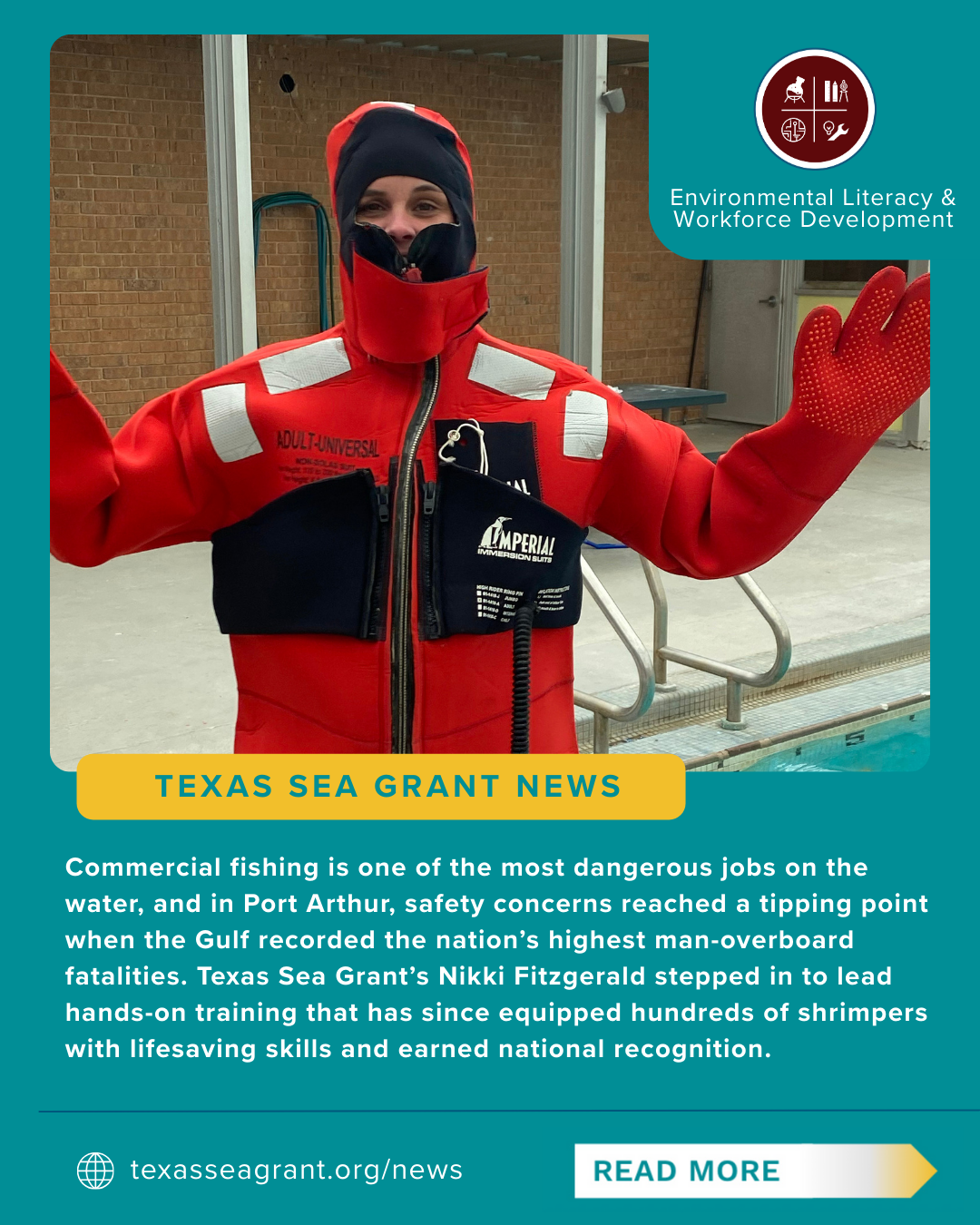
Texas Sea Grant
For individuals with a passion for hard work, seafaring, and seafood, the commercial fishing industry is a promising career to consider. With roles ranging from entry-level deckhands to advanced mariners, the field offers no shortage of growth and learning opportunities. It’s worth noting, though, that while the industry can provide a rewarding lifestyle, it also carries risks that office jobs do not. Without proper training, routine voyages can become treacherous, a reality once commonly faced by the shrimp fleets of Port Arthur.
In 2019, safety concerns in the region reached a tipping point, with the Gulf recording more man-overboard fatalities than any other U.S. region. The Southeast Texas Waterways Advisory Council (SETWAC), part of the wider navigational Harbor Safety Committee guided by the U.S. Coast Guard, turned to Texas Sea Grant Jefferson-Chambers County Extension Agent Nikki Fitzgerald for support with one critical mission: making shrimping safer in one of Texas’ busiest ports.
SETWAC, which is composed of industry members in Texas, appointed Fitzgerald as lead fisheries advisor for her strong community connections and outreach through Texas Sea Grant and AgriLife Extension. Though she had no direct shrimping background, she leaned on her extension strengths — bringing people together and translating technical knowledge into practical, usable training.
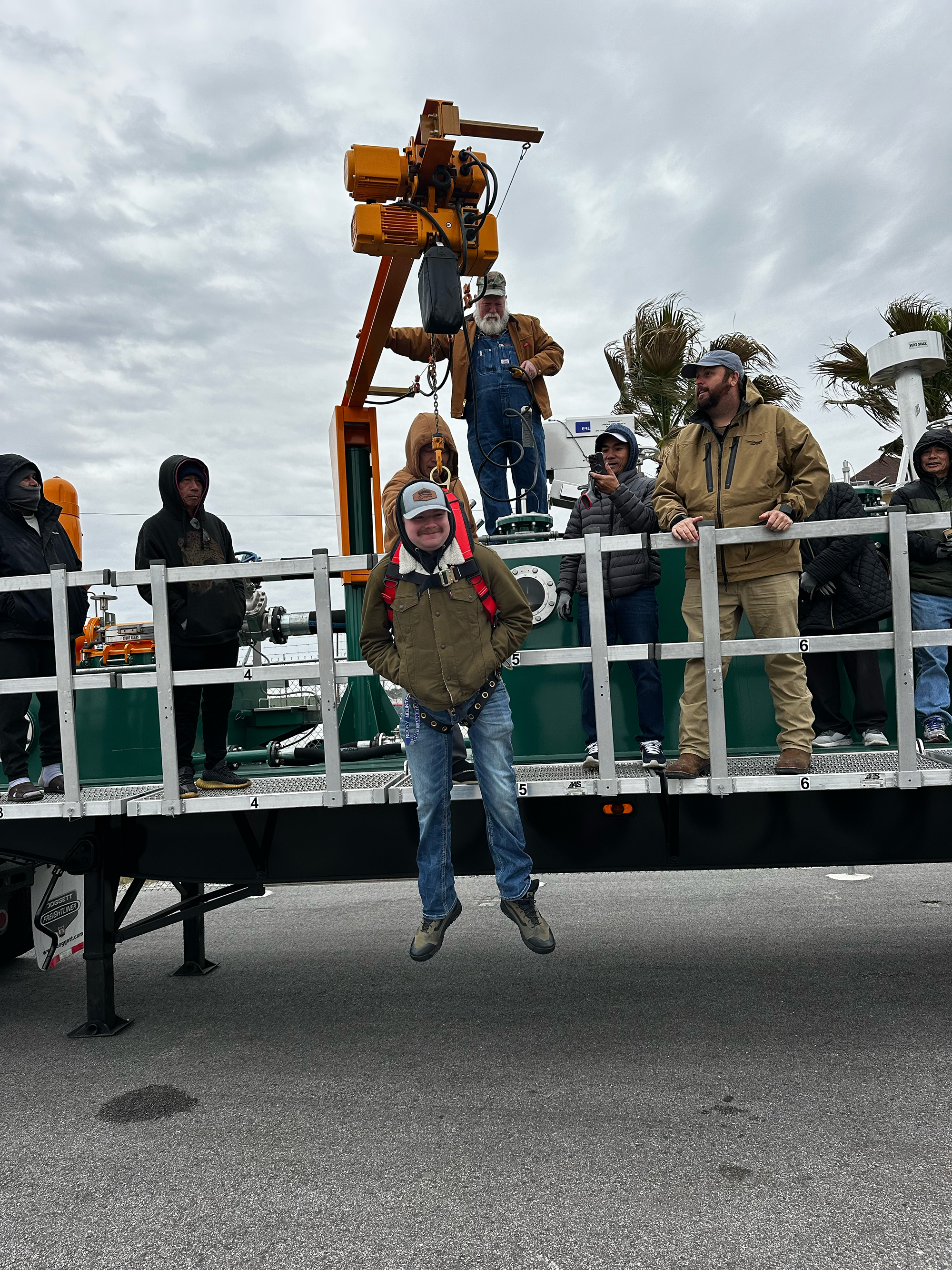
A fisherman being lifted during a rescue simulation.
Texas Sea Grant
To launch the effort, Fitzgerald partnered with the Alaska Marine Safety Education Association to deliver hands-on safety courses tailored to local fleets. In that first year, 89 fishermen completed intensive 10-hour training covering firefighting, man-overboard recovery, the “seven steps of survival at sea,” and other critical skills. The workshops went beyond standard fishing practices, incorporating hands-on survival techniques such as cold-water immersion response, operating dewatering pumps, and coordinating helicopter rescues. With support from the Coast Guard, which provided vessels, participants gained realistic experience, even lifting one another over the sides of boats to simulate rescues. For many shrimpers, the courses marked the first time they had practiced such lifesaving drills.
Recognizing the large population of Vietnamese-American shrimpers in Texas, Fitzgerald also arranged for the trainings to be translated, ensuring broader access and participation.
Building on this momentum, in 2020 Fitzgerald partnered with the Southwest Agricultural Center to focus specifically on man-overboard research and training, engaging another 80 fishermen for a series of training sessions.
Between larger courses, she continues to coordinate CPR and first aid training so crews maintain up-to-date certifications. Altogether, Fitzgerald has delivered formal safety instruction to over 200 captains and crew members to date.
Her work has made a significant impact. What began with hesitation within the crews often transformed into strengthened camaraderie and stronger confidence with safety protocols. Fitzgerald recalls moments of laughter and bonding that underscored the family-like nature of these crews, reinforcing the importance of investing in their well-being.
Her leadership has also earned recognition. The U.S. Coast Guard honored Fitzgerald with the Meritorious Public Service Award. “The Coast Guard awarding me was never on my bingo card,” she joked. The Coast Guard also named SETWAC the Harbor Safety Committee of the Year for 2020–2022, honoring its role in promoting maritime safety, fostering partnerships and implementing innovative solutions along the Sabine-Neches Waterway. Amid the awards, Fitzgerald said her proudest achievement has been serving as a bridge — helping shrimpers communicate their needs with regulatory agencies and ensure their voices are heard.
Looking ahead, Nikki hopes to expand training to reach the next generation of fishermen. By instilling safety skills early, she aims to build a culture where commercial fishing becomes a safer profession for decades to come.
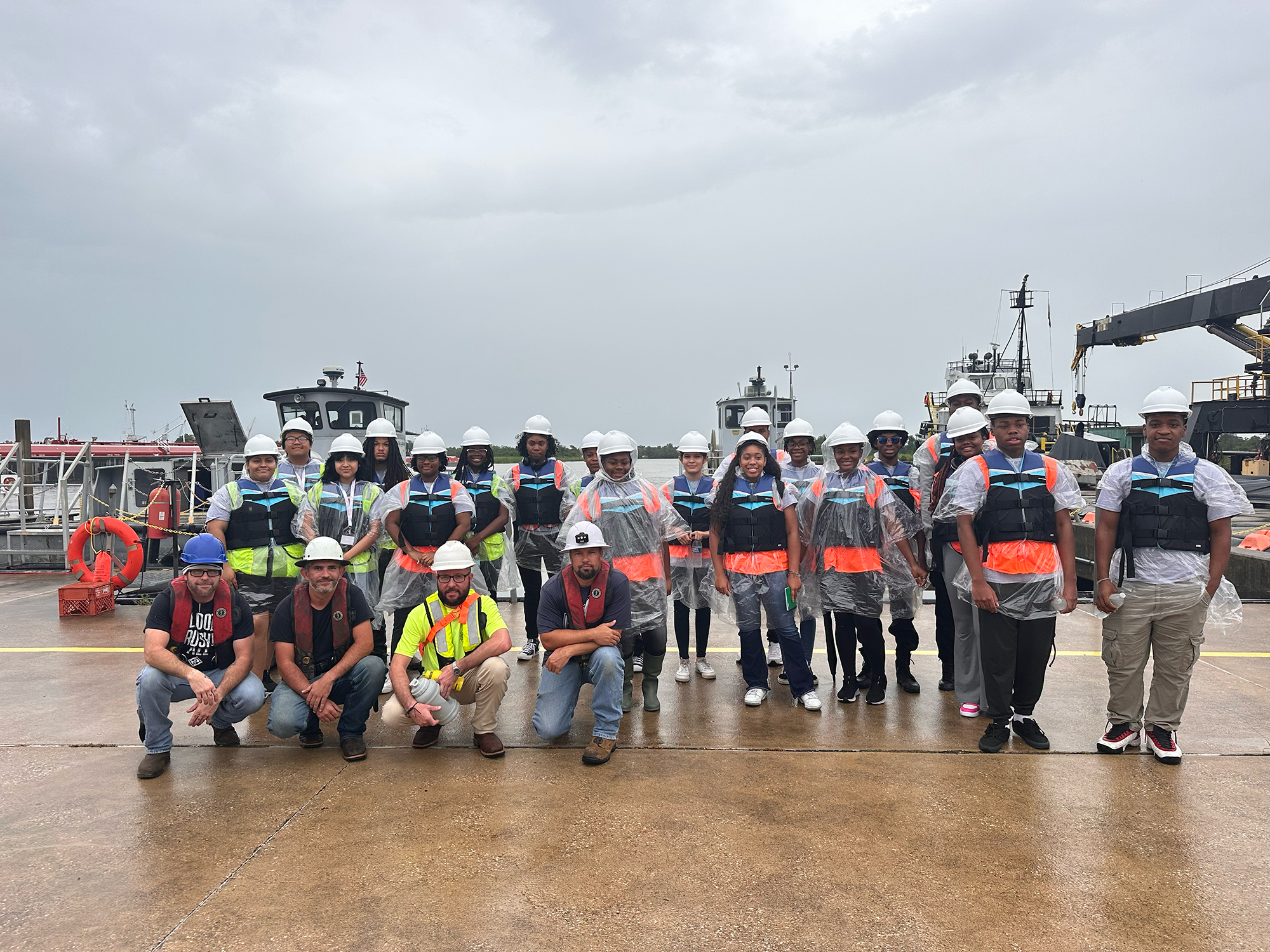
Fishermen safety training group in ponchos
Texas Sea Grant
####
About Texas Sea Grant
Texas Sea Grant is a unique partnership that unites the resources of the federal government, the State of Texas and universities across the state to create knowledge, tools, products and services that benefit the economy, the environment and the citizens of Texas. It is administered through the National Oceanic and Atmospheric Administration and is one of 34 university-based Sea Grant Programs around the country. Texas Sea Grant is a non-academic research center at Texas A&M University. The program’s mission is to improve the understanding, wise use and stewardship of Texas coastal and marine resources.